Generators
Honda generators are specially designed to provide the power you need, when & where you need it. From easily carried portable types to higher capacity commercial electrical generators and emergency backup generators that operate fully automatically in the event of power outages, Honda’s broad lineup of electrical generating products meets the diverse needs of people throughout the world.
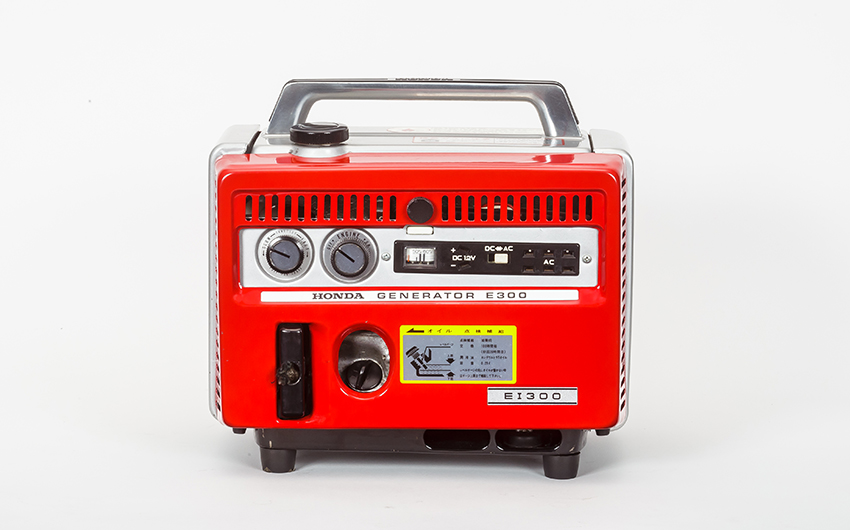
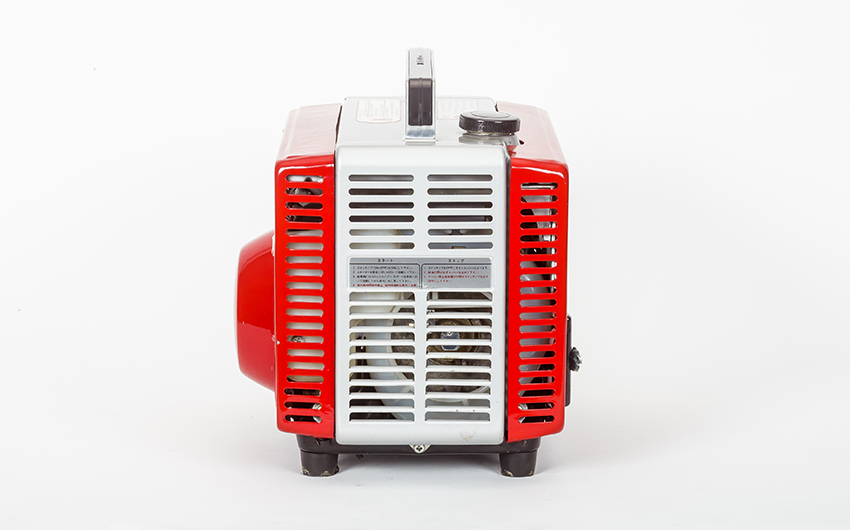
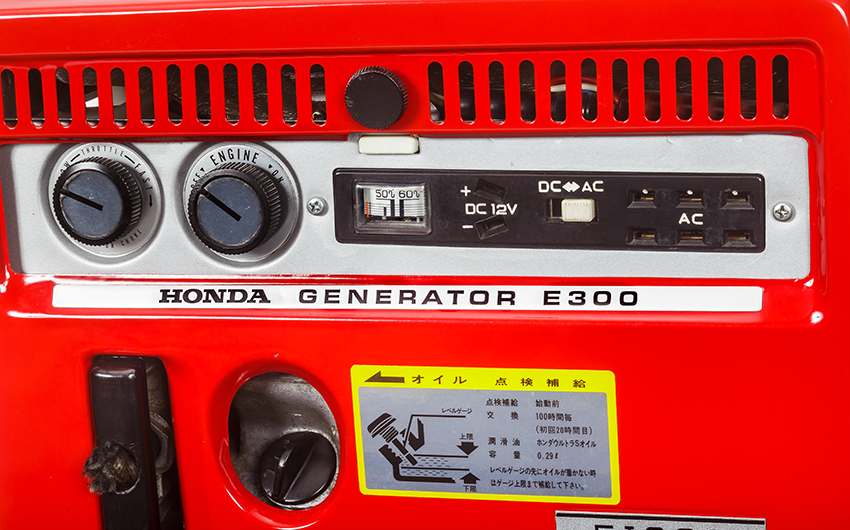
Lightweight, compact and easy-to-handle, the E300 created a new genre of portable generators.
Honda’s first-ever generator was the compact and portable E300, which debuted in 1965.
The use of internal combustion engines to power electrical generators has a long history, and Honda’s very first product, an auxiliary engine to power bicycles, also reused a small engine originally developed to power the generator of a portable radio transmitter made for the wartime Japanese Imperial Army. In the 1950s, electrical generators was generally only used by large facilities such as factories and the military, and were quite large, complex and noisy.
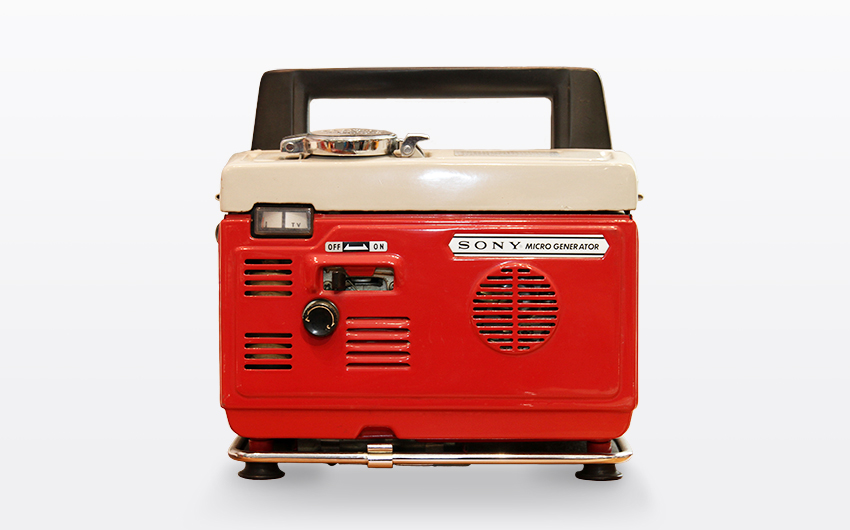
The release of the E40 signaled the birth of portable generators.
In 1962, Honda offered to develop a portable power source for Sony’s revolutionary new Micro-TV, and created the E40 prototype. Featuring compact proportions and easy portability, the E40 completely changed the image of electrical generators. Although the E40 was not developed into a fully commercial product, the advantages of its unprecedented technological capabilities, incorporating all needed mechanisms into its small housing were put to use in the development of the E300, Honda’s first mass-produced portable generator model, which went on sale in 1965.
The E300’s main development themes were ‘small, lightweight and easy to carry,’ ‘quiet and easy to use’ and ‘a design on par with household appliances, making it look like more than just a machine.’ Its 55.2cc 4-stroke SV (side valve) engine was specially designed to fit into the E300’s small housing, and it contained a host of new technologies like a valve rotation mechanism that extended operation and the world’s first timing belt-driven camshaft, which was both lightweight and quiet operating. The E300’s housing was designed to look somewhat like a briefcase, while its simply designed switches offered easy operation.
When it was first put on sale, Honda assumed that the E300 would be mainly used for leisure activities, but owing to its ease of use, there was a massive demand for it in work applications on construction sites, etc. This made the E300 a giant hit, with cumulative sales of 500,000 units.
The popularity of the E300 provided an abundance of data for creating legislation to guide the design of portable electrical generators with safety foremost in mind, and further contributed to safety improvements introduced in subsequent models.
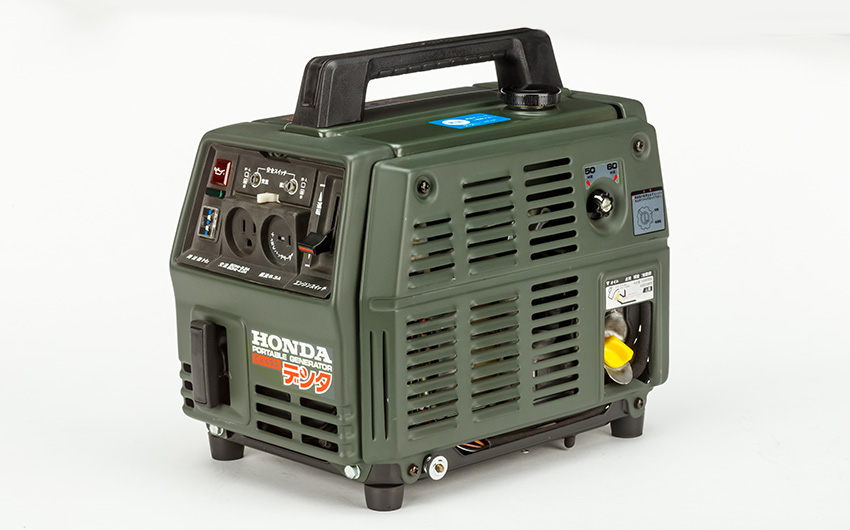
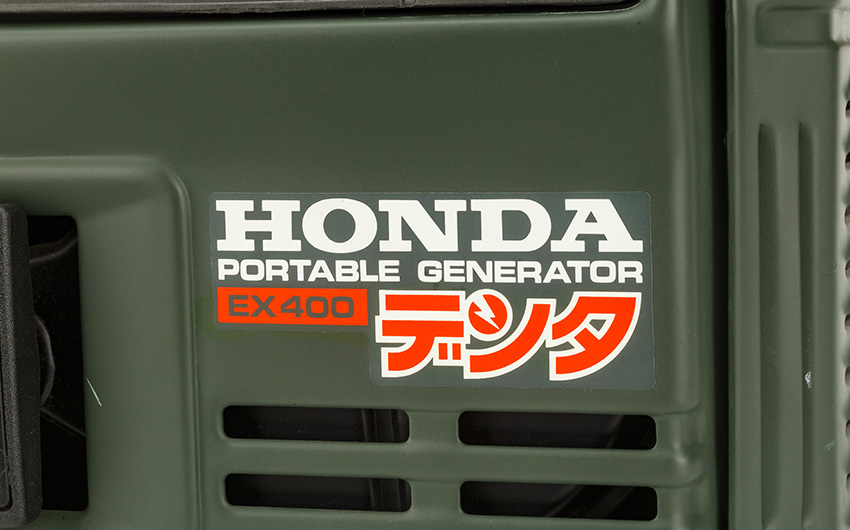
The EX400 Denta became synonymous with portable generators.
In 1979, the E300 underwent a model change and became the E400, with stronger output and automatic voltage control circuitry designed to maintain a steadier voltage output. Designed for even greater ease of use, the EX400 enjoyed annual sales of over 100,000 units worldwide. Known as the DENTA in Japan, it also became a byword for portable electrical generators.
Entering the 1990s, a new age of personal computers and high-performance precision electronic devices began to rapidly expand in popularity. These precision electronic devices were designed to be powered by household electrical outlets (in other words, electricity with a clean sine waveform). Portable electrical generators that used engines to produce electricity generally had distorted waveforms compared to the electricity produced by the massive centralized power generation units that powered homes and businesses. To tackle environmental issues that were then coming to a head worldwide, the need was also found to develop quiet, fuel-efficient and low vibration generators.
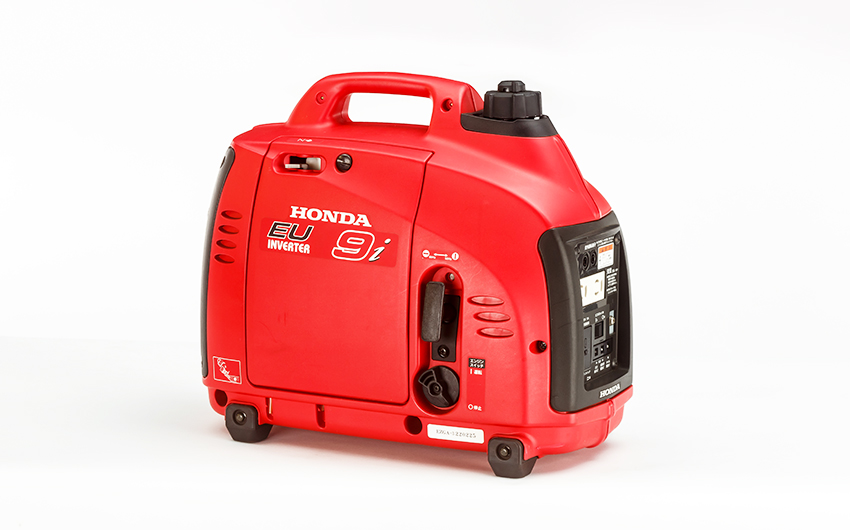
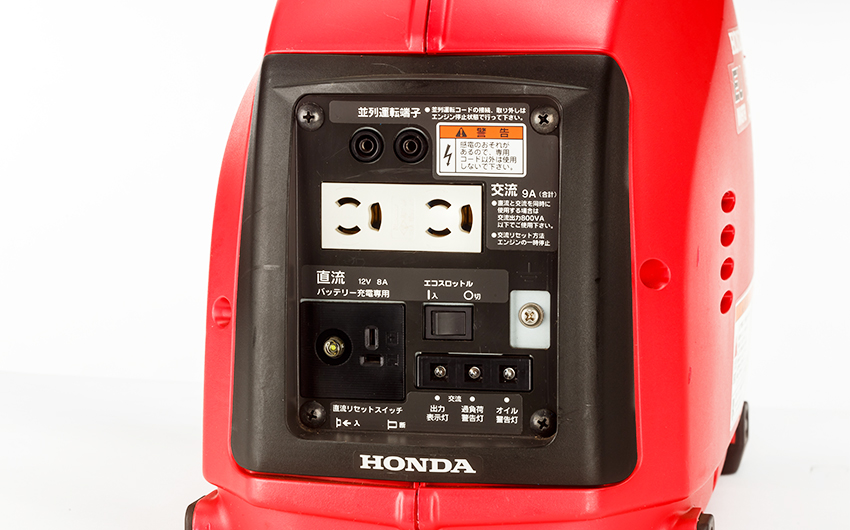
The GENE21 series EU9i was designed to provide clean waveform electricity.
Honda undertook the difficult challenge of developing a quiet, low-vibration generator with minimal exhaust gas emissions that could produce AC current with as clean a sine wave or better than that of the current available from a typical wall outlet. The GENE21 Series of portable electrical generators went on sale in 1998 supplying clean waveform electricity via the first CPU control capable of calculating tens of thousands of operations per second, and incorporating a newly-developed high-speed multipolar outer rotor-type alternator and a sine wave inverter.
With its alternator downsized and reduced to around half the weight of previous models, the EU9i achieved the lightest weight in the 1kVA class at 13 kilograms. Its double-layer soundproof construction cleared even the world’s strictest European environmental noise (EN) regulations, while the addition of an eco-throttle to automatically control engine speed reduced fuel consumption by 20 to 40%. Exhaust emissions and noise were also successfully minimized, and the ability to generate even more power by connecting two generators in parallel was now possible as well.
The GENE21 Series was designed with the needs of the 21st century in mind, and featured a lineup of models that offered enhanced output, super-quiet models, and models that featured electronically controlled fuel injection. Honda’s ‘red power generators’ continued to mature and evolve, becoming the byword of a high-quality brand recognized worldwide, including Europe and North America, where significantly greater output was needed to power such large devices as air conditioners for outdoor leisure activities. Cumulative production of the GENE21 Series surged past 1 million units by 2006.
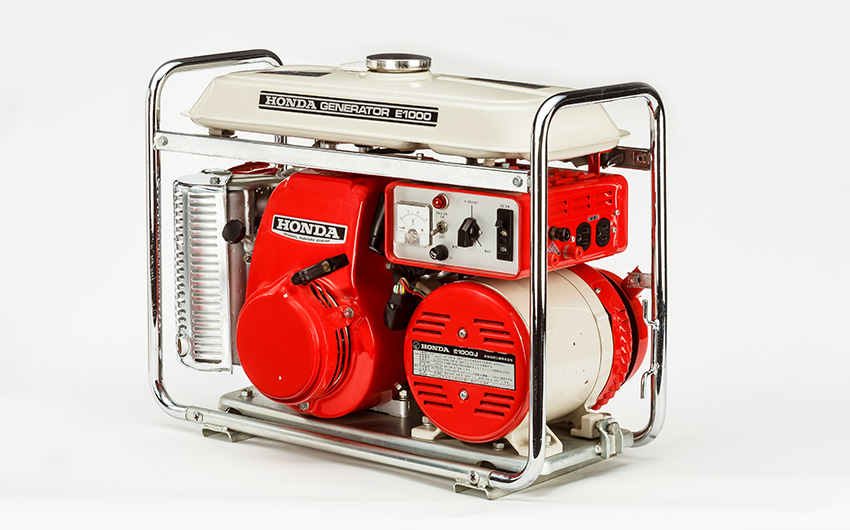
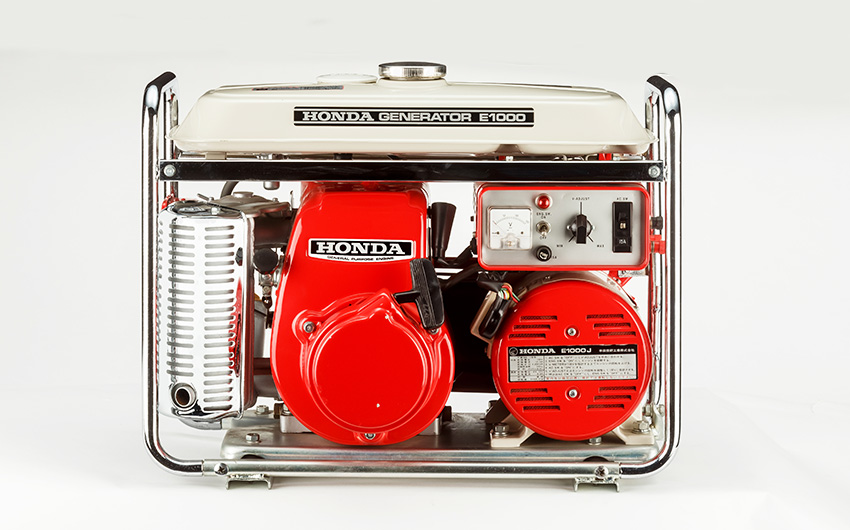
With its rugged frame, the E1000 proved useful on the job at work sites.
Released in 1965, Honda’s E1000 electrical generator was not only portable, it also provided the stronger output required for commercial applications. Its engine and generator unit were surrounded by a sturdy tubular steel frame, giving the E1000 a smart exterior design that differed significantly from the unsophisticated appearance of earlier generators. With its attractive design, easy operation, solid reliability and rugged durability, the E1000 won an excellent reputation even in professional fields.
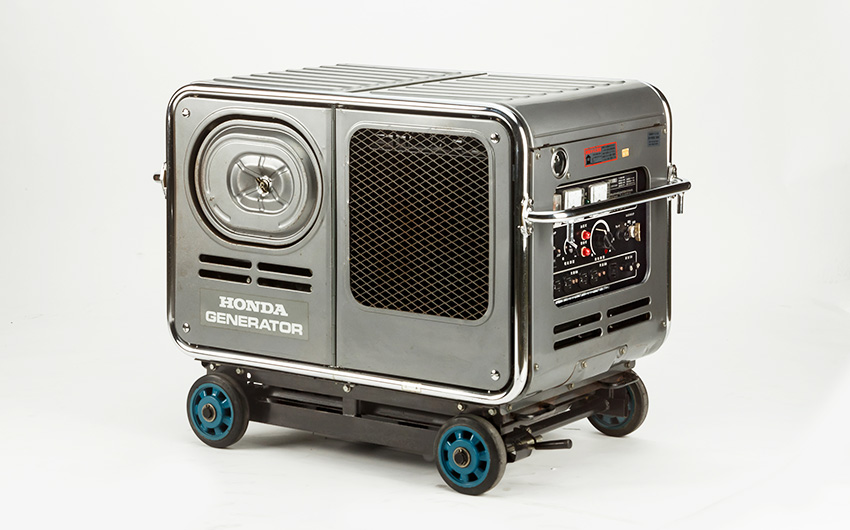
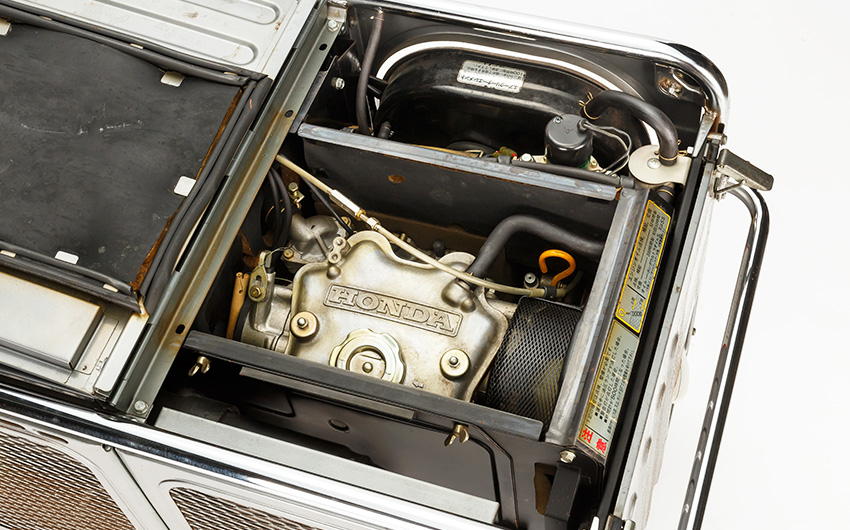
The EM3000 combined both high power and quiet output.
Quiet operation was especially important to the growth of late night construction work in urban areas. This led to the 1973 release of the EM Series of ultra-quiet generators that delivered high output with low-noise operation. The quietness of these units was made clear by an episode that occurred in the final stages of development when a test trial was performed in the middle of the night in front of the home of the engineer in charge of development, and yet nobody heard anything. The EM Series was praised for its quiet operation, and soon came to be widely used on location for film and TV work.
Continuing to meet the world’s diverse needs for power, from portable compact models to commercial high output models, Honda’s wide range of electrical generators crossed the cumulative production number of 1 million units in 1978.
As large-scale disasters around the world occur with some frequency, greater emphasis came to be given to the need for effective emergency electrical generation in cases of disasters. Japan’s 1995 Great Hanshin Earthquake, which occurred in the early hours of a January morning, led to widespread power outages that paralyzed transportation due to the failure of traffic signals. This lack of electricity posed a serious obstacle to emergency efforts and attempts to send in backup resources from neighboring areas.
To cope with such situations, Honda developed a line of emergency power generators that would automatically start up in the event of a power outage, then automatically shut down when their electrical output was no longer needed. These were coated with a heavy-duty layer of paint that could last for 20 years or more, even in cases of outdoor use, and these emergency generators were delivered to over 500 locations in Japan as ‘Generators we hope will never have to be used.’
The Great East Japan Earthquake of 2011 and its related tsunami totally destroyed the region’s infrastructure in an instant. The effectiveness of portable generators was proven by these extraordinary circumstances. Honda learned from the Great East Japan Earthquake, and developed the EU9iGP (April, 2012) and the EU15iGP (April, 2014) as disaster preparedness models that run on propane gas, which was found to be easier to obtain than gasoline during and after a disaster.
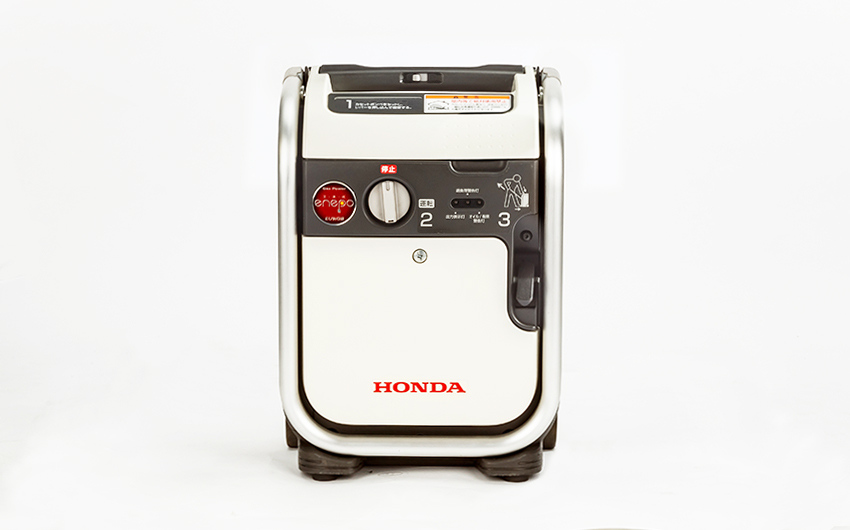
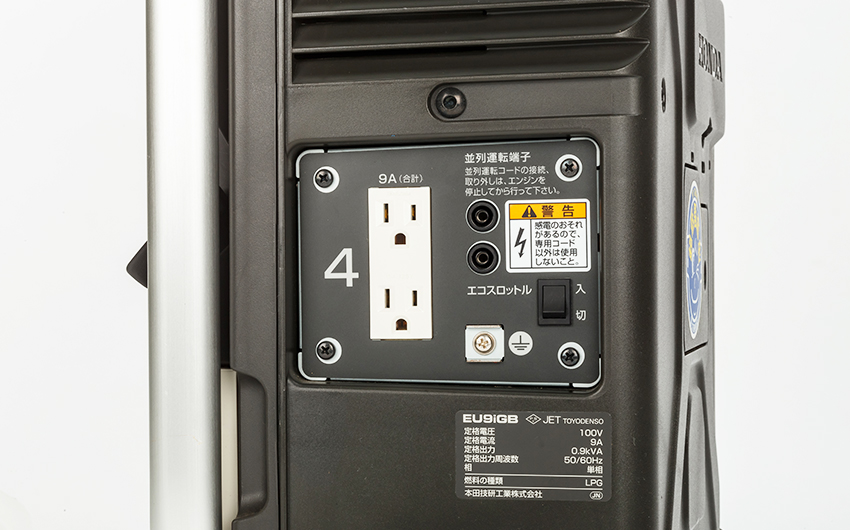
The Enepo 9iGB uses cassette-type LPG gas canisters for fuel.
Since the release of the E300 in 1965, Honda’s long years of research into generators has also focused on the fuel they use. Released in 2010, the Enepo 9iGB was a gas-powered generator that used butane gas canisters for fuel. Gas canisters are easier to buy and safer to store than gasoline, so the Enepo 9iGB soon gained an excellent reputation among even first-time users of electrical generators.
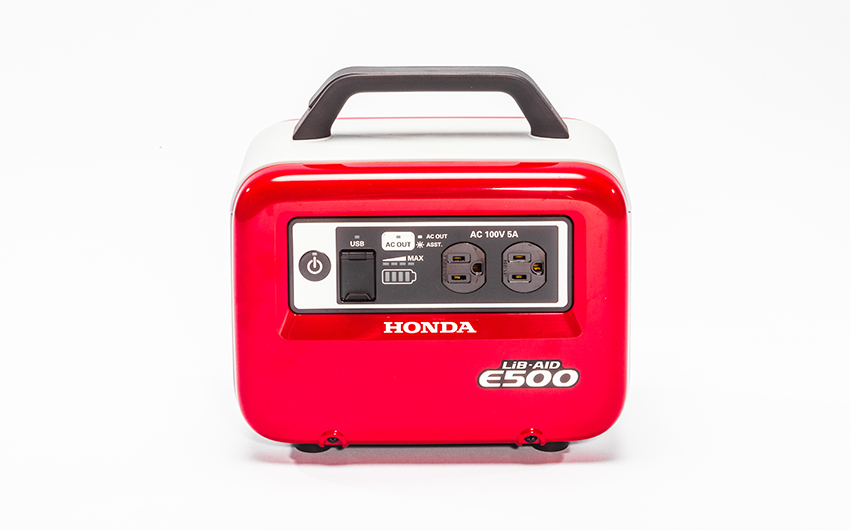
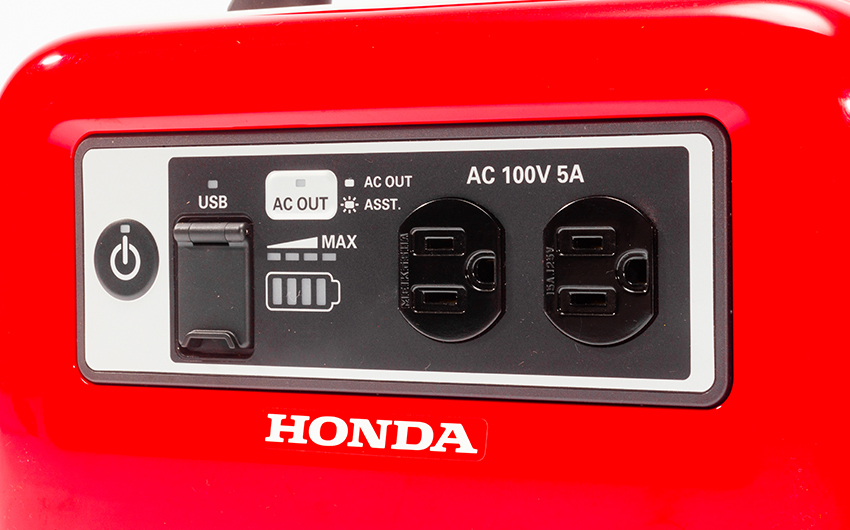
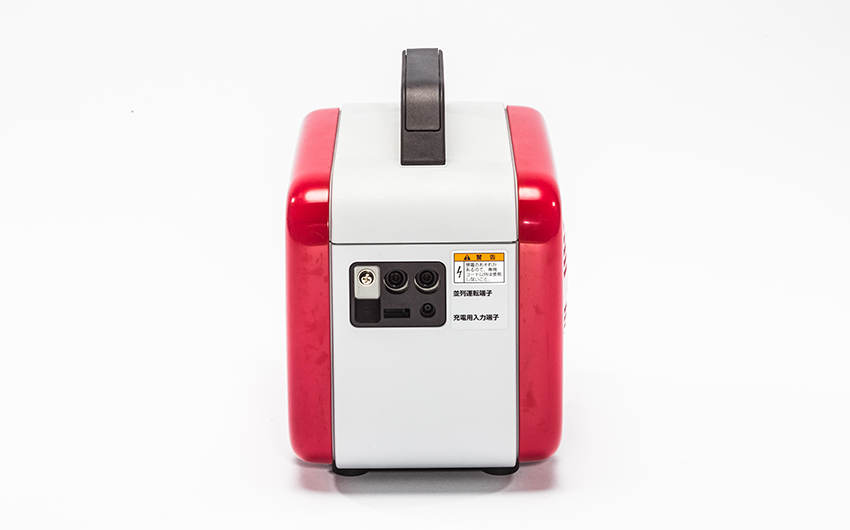
The LiB-AID E500 powerbank introduced a different concept from traditional generators.
In 2017, Honda also began sales of its LiB-AID E500 as a new concept in electrical storage devices. Its built-in lithium-ion batteries can be charged from ordinary household current or an automotive accessory socket, and provide a source of stored electricity that users can carry with relative ease. Designed in homage to the original E300, its compact form weighs in at just 5.3 kilograms, making it easy to carry around. The key feature of the E500 is that it emits no exhaust gases, thus enabling safe use indoors or even inside a car or tent.
Equipped with an electric fan for the cooling of its internal inverter, its operation is remarkably quiet. The LiB-AID E500 is also incredibly easy to operate—simply plug it into an electrical socket or USB port and press a button. It also incorporates a sine wave inverter, so it can be used to power sensitive precision devices like personal computers or smartphones, etc.
It can also be hooked up in parallel with other higher-output Honda generators like the GENE 21 Series or Enepo 9iGB, to provide power to larger electrical appliances. An electrical storage device that can be used like an ordinary home appliance, the LiB-AID 500 also signals the start of new challenges made possible by Honda technology and ideas that have accumulated through its long years of research and development of electrical generators.
Honda’s extensive lineup of electrical generators is now joined by electrical storage devices as two similar yet fundamentally different sources of portable power, offering limitless potential for the future.