Tillers
At the start of the 1940s, Japan was still essentially an agricultural country where nearly half its population of 72 million people lived in farming villages. However, during the Second World War the men of these villages were forced to join the army, and when the war ended with Japan’s defeat in 1945, the country was faced with a critical shortage of manpower. By the 1950s, this shortage of agricultural labor was further compounded by Japan’s post-war period of extraordinary economic growth, during which time young people―who had been expected to be the next generation of farm workers―left their rural villages to find work in the cities. These sudden changes in the agricultural environment forced on the countryside the rapid adoption of agricultural machinery to make up for labor shortages and extend the industrial efficiency of modernization to Japanese farming.
Most agricultural machinery in the 1950s, like tillers or threshers, were designed to be powered by primitive agricultural engines using belts and pulleys. Yet these types of machines required extensive familiarity and knowhow for both initial setup and actual use, making it difficult or nearly impossible for anyone with limited experience to effectively use them. Machine components and moving parts were also often left exposed, and without any safety mechanisms this made them extremely dangerous to use.
This situation led one manufacturer of agricultural equipment to ask Honda to create an engine that could power a portable duster. So, in 1953 Honda developed the two-stroke H-type engine and soon began supplying general-purpose engines as an original equipment manufacturer (OEM). This was later followed by the four-stroke T-type, the more powerful VN-type and other engines that would come to play a significant role in the modernization of Japanese agriculture.
Honda’s OEM-supplied engines introduced new facets of mechanization that together lessened the hard workload of farming. Yet Honda soon realized that engines were mere components, and that the only real way to ease the labor of farming was to make complete finished products. This led to the establishment of Honda’s Agricultural Machinery Development Division in 1958.
Development work quickly began on creating a tiller, the one item that farmers needed most at the time, and in 1959 Honda released the F150 tiller, its first-ever complete, self-contained power product.
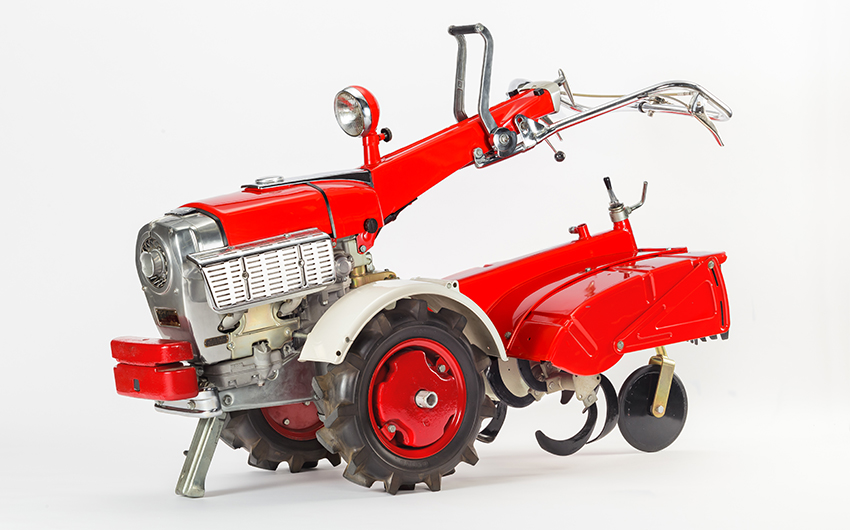
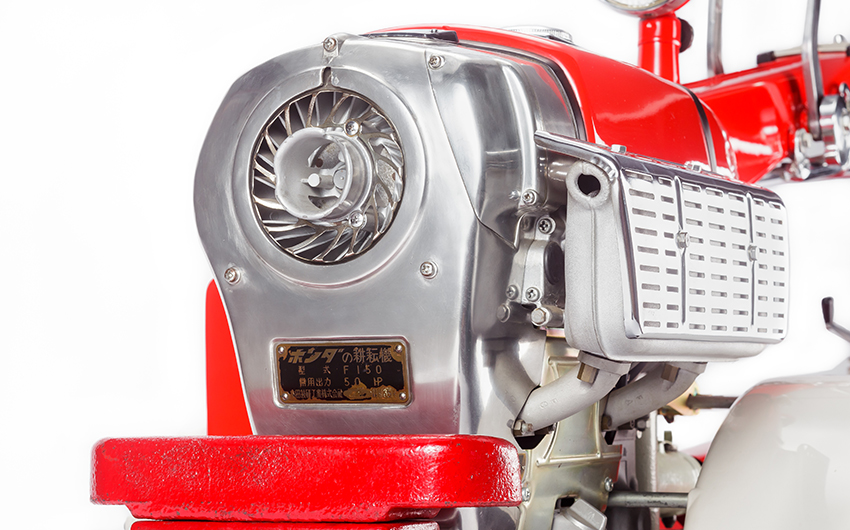
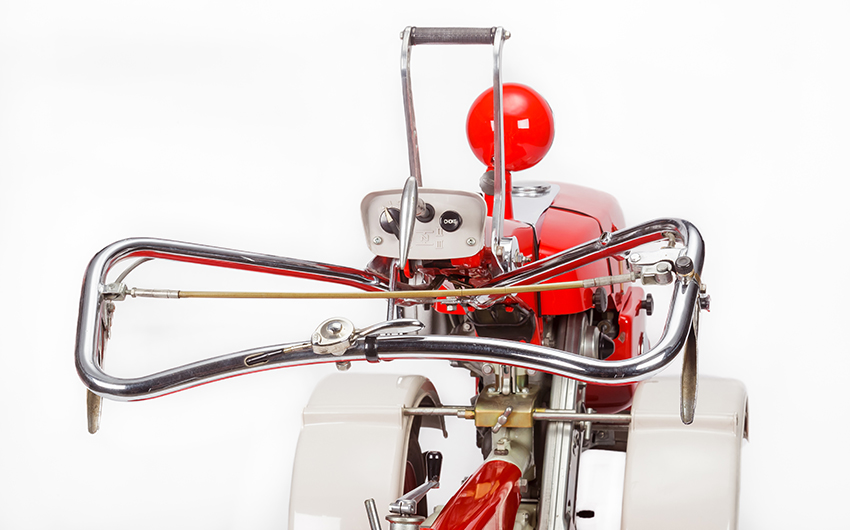
The F150 tiller was Honda’s first-ever general-purpose Power Product.
The main concept behind the development of the F150 was to make a truly revolutionary tiller that would be ten years ahead of its time. The result was a relatively compact, lightweight product that could be used with ease by virtually anyone. The tiller’s usefulness was further enhanced by its ability to also be used as a tow tractor, a great advantage considering the relative lack of vehicles in Japan at that time.
The F150’s engine was mounted upside-down to give it a lower center of gravity, and integrated with the transmission to achieve a more compact configuration in line with farming conditions in Japan. Its lower center of gravity made the F150 more stable to operate, while its automatic centrifugal clutch and three-speed transmission gave it excellent operational performance. In fact, it was even used in some factories as a makeshift tow tractor.
All of the F150’s controls were located within easy reach of the user’s hands, while its centrifugal clutch, similar to that used in the Super Cub, made it much easier to use and operate. Its handlebars were also equipped with shock absorbers to minimize vibration.
Earlier tillers were often difficult to start, but the F150 simply required a pull on a large, conveniently positioned lever to get the engine started and running. The integration of its engine, mechanical components and all moving parts under the tiller’s attractive full-coverage bodywork not only made a major contribution to overall safety, it also completely changed the image of the tiller by giving it smart, modern lines with bright red bodywork that brought an entirely new look to farming.
The F150 was designed by Honda based on a totally different concept from all previous tillers. It proved so popular that it was said that “the Honda whirlwind turned Japan’s fields red overnight.” Farming in Japan received a major shock, while the tiller also had a big impact on the development of subsequent agricultural machinery.
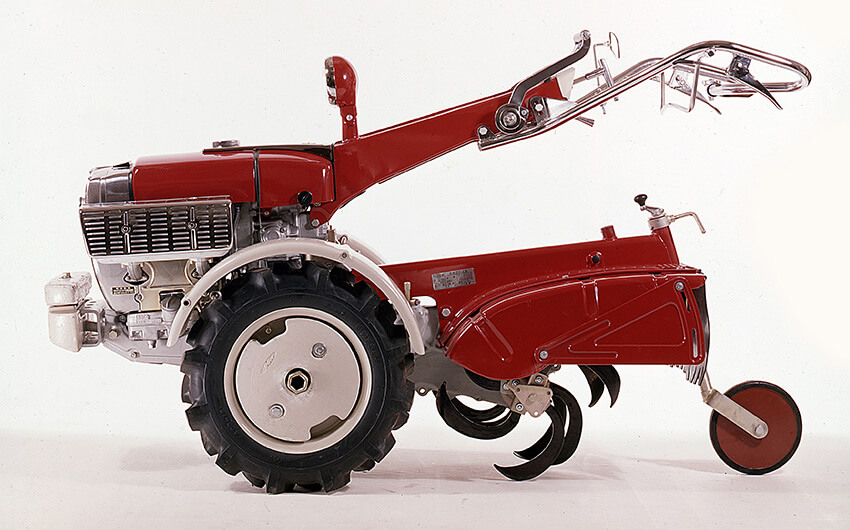
The F150 was boosted in power to become the F190.
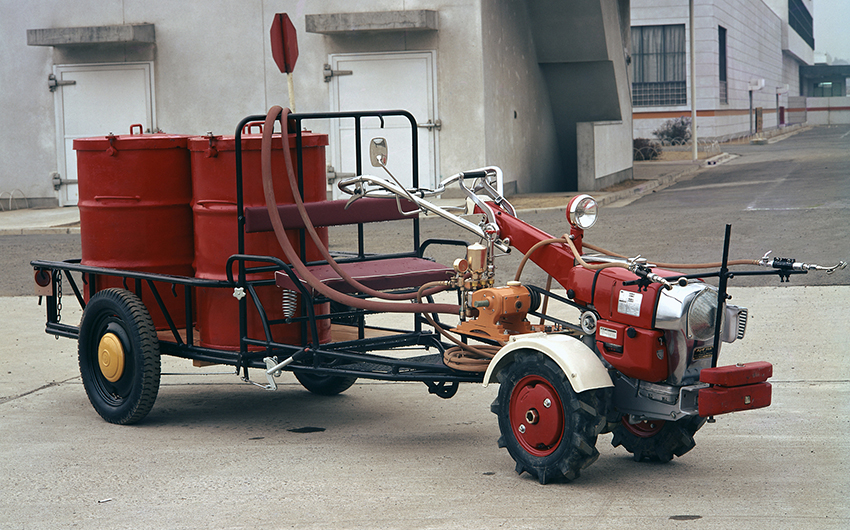
The highly versatile F Series tillers could also be adapted for use as towing machines for transportation.
By the 1960s demand was building for tillers with even more power in order to more effectively perform farm work. To meet this demand, Honda released the higher-displacement and higher-powered F190 in 1961. Come 1963, the F190 was Honda’s first power product to be exported to France. The relatively compact and lightweight yet high-powered F190 was praised for its ease of use and strong performance on small farms like France’s famed vineyards. Another model change in 1968 led to the release of the F80, which delivered even stronger power. All these tillers followed the same basic configuration and design of the F150, and achieved record sales over 13 years while undergoing repeated model changes.
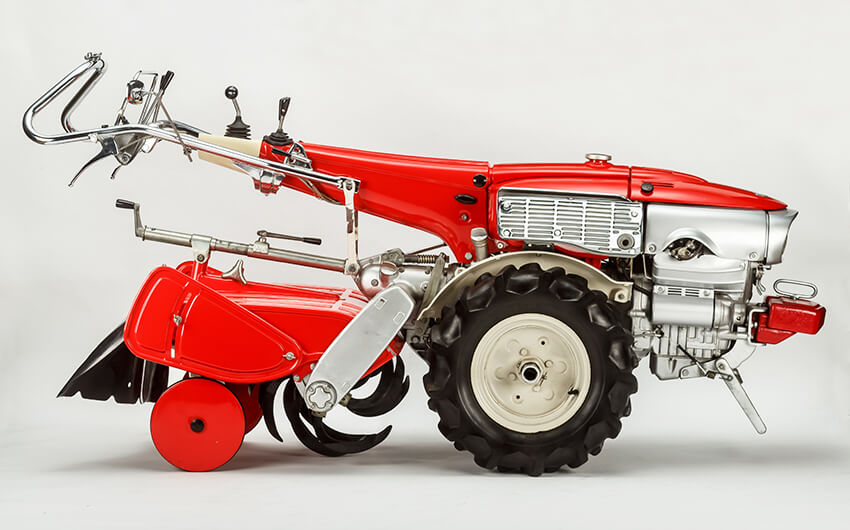
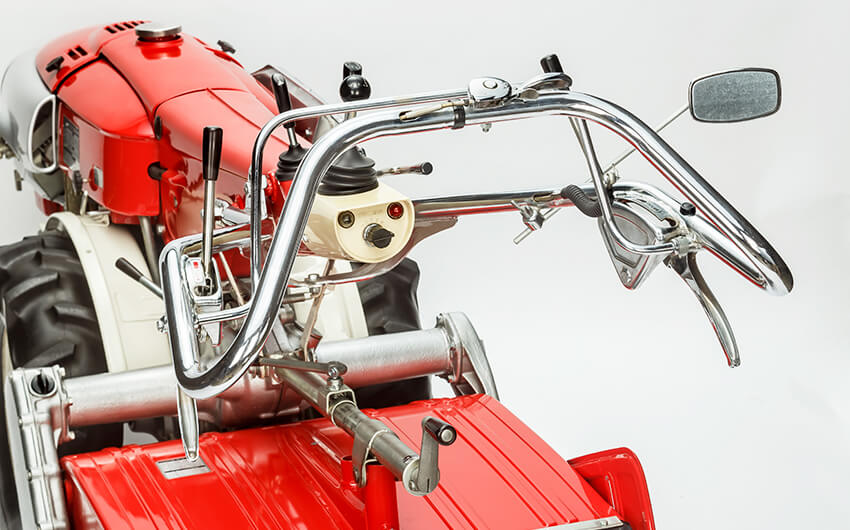
The F90 was equipped with Honda’s first diesel engine.
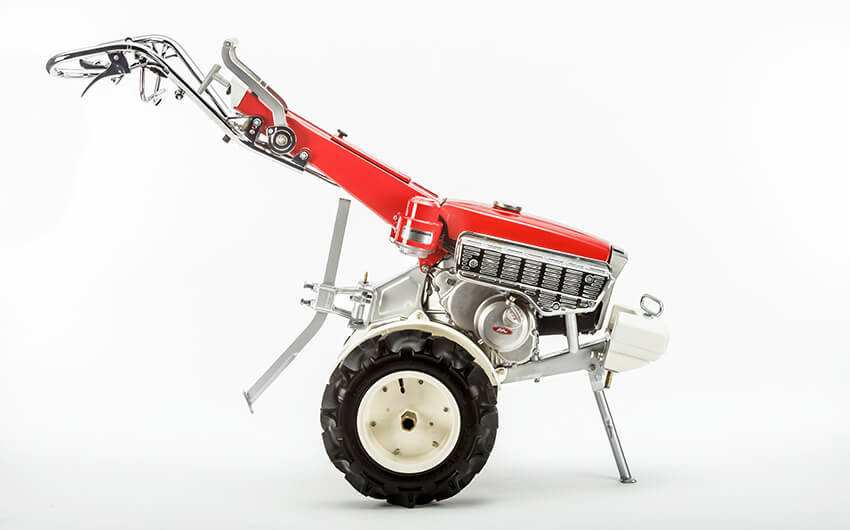
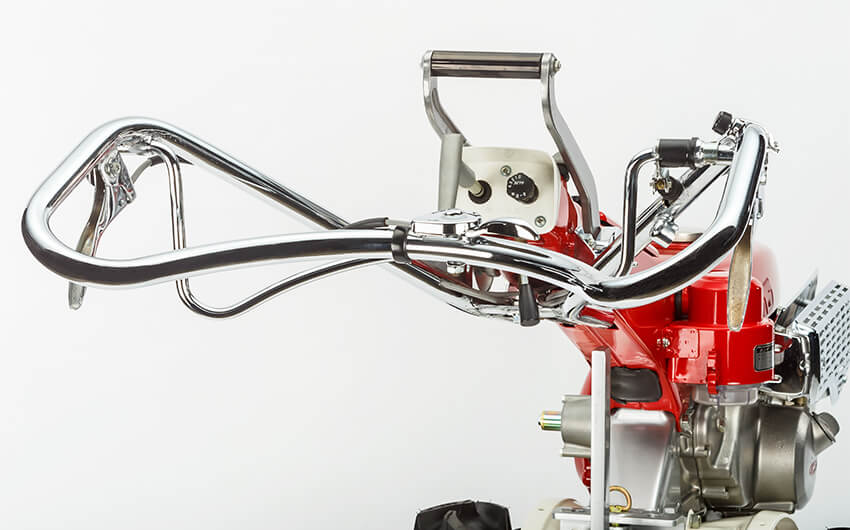
The F60 specialized in tilling work.
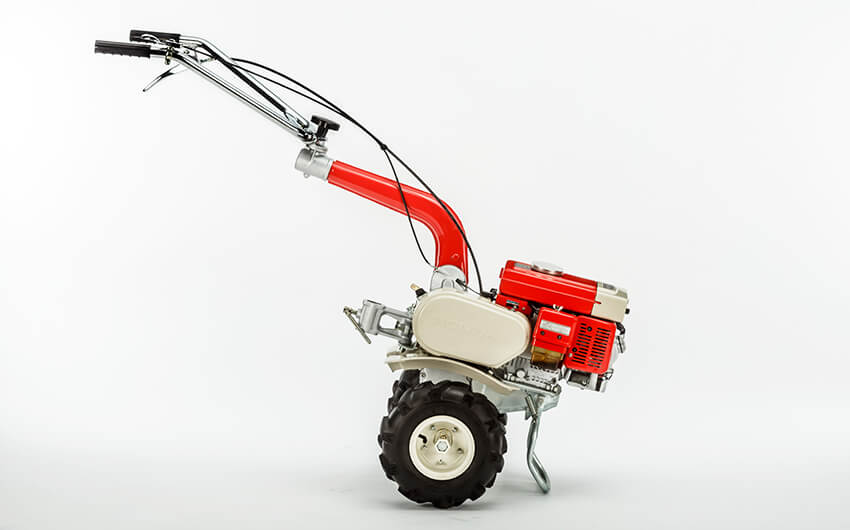
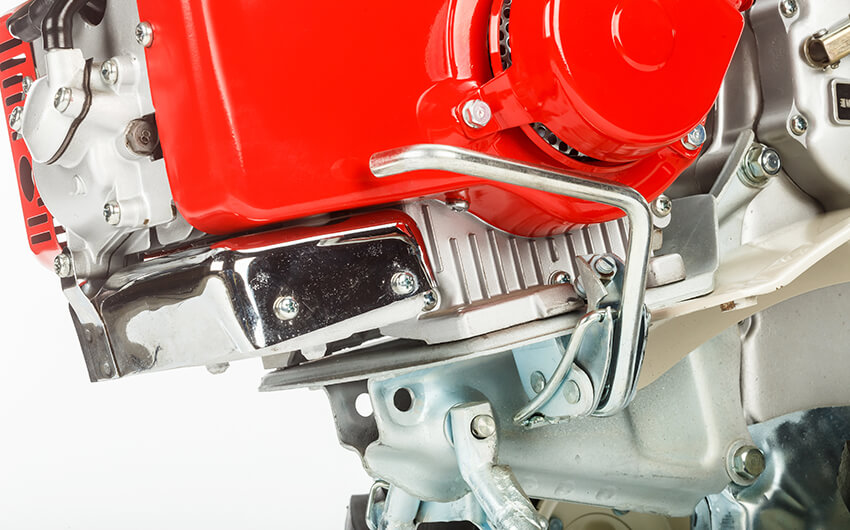
The F25 featured an engine that was easy to install and dismount.
Requests from farmers began to diversify in the 1970s, leading to the need for tillers and farm equipment to more closely match the region and types of farms under cultivation. Honda accommodated these diverse needs with a varied lineup of products. The F60 was released as a robust yet lower-priced model specially made to handle smaller and lighter farm workloads compared to the all-round F190.
The F90, on the other hand, was a bigger model powered by Honda’s first air-cooled diesel engine, which delivered a full 9 horsepower of greatly enhanced capacity for heavy farm work. The portable F25’s compact configuration weighed in at just 37 kilograms and featured convenient fold-away handlebars. Its engine was also easily detachable for use as a power source for pumps or threshers, etc.
However, as tillers were spreading out far and wide throughout the ’70s, Japanese agriculture was also undergoing a period of transition. Spurred by high economic growth, Japan was shifting from being an agricultural nation to an industrial one. The agricultural population fell substantially, while the scale of farming shifted from single families to larger farms using large machinery. This led agricultural machinery to shift to bigger, more specialized models.
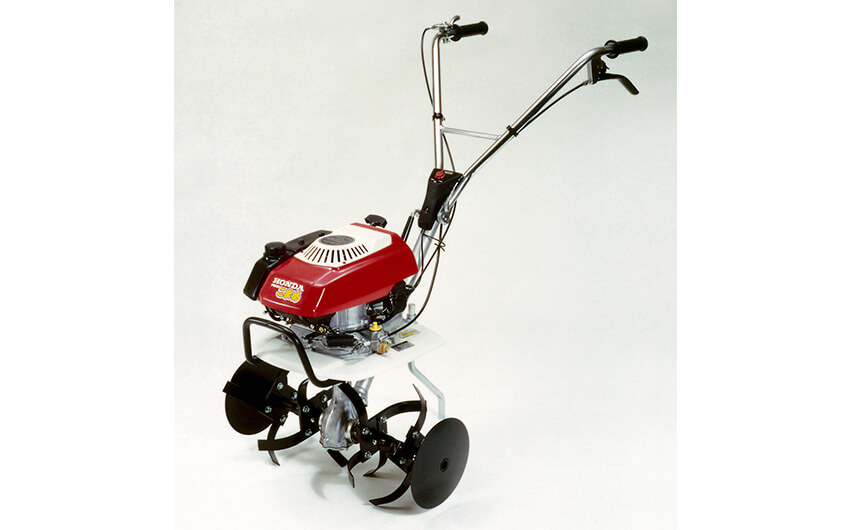
The first Comame F200 garden tiller debuted in 1980 as a pioneer in hobby tillers.
Yet, at the same time small household vegetable gardens using uncultivated farmland began to see a gain in popularity in urban areas, as small-scale farming became a relaxing hobby for city dwellers.
Honda undertook new challenges to meet these momentous changes on the face of agriculture. In 1980, the compact Comame F200 tiller was released as a hobby-sized model that even people with no previous experience using a tiller could operate with ease.
The Comame F200 weighed just 25.5 kilograms, making it easy to lift and carry, while its folding handlebars made it easy to load into the trunk of a car. A light pull on its recoil starter cord offered easy starts, while its conveniently positioned levers ensured easy operation. Infused with all of Honda’s accumulated knowhow about tillers, the Comame F200 also incorporated such features as a speed reduction unit equipped with planetary gears, making it a super-compact tiller that belied its cute appearance by delivering genuinely useful full-sized performance.
The Comame F200 was soon found to be the perfect size for working small fields, household vegetable gardens, mountain plots or fruit farms too small for bigger machines to be used. Professional farmers also purchased it in much greater numbers than initially expected.
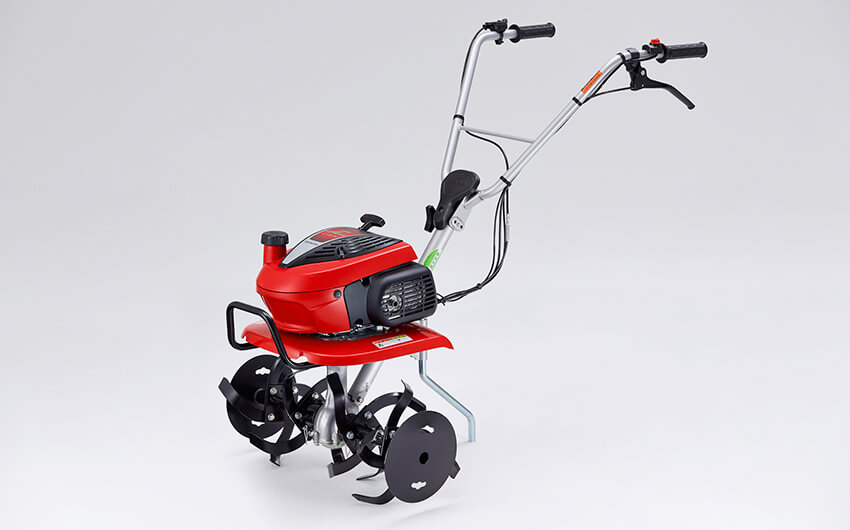
The Komame F200 garden tiller underwent repeated model changes, evolving into the 4th generation F220 in 2016.
TV commercials and other marketing campaigns expanded the Comame F200’s appeal, giving it a remarkable degree of popularity as a hobby model. Its reputation was further enhanced by demonstrations at an agricultural show in Paris, which helped it achieve record sales figures of over 40,000 units worldwide in only the first year following its debut.
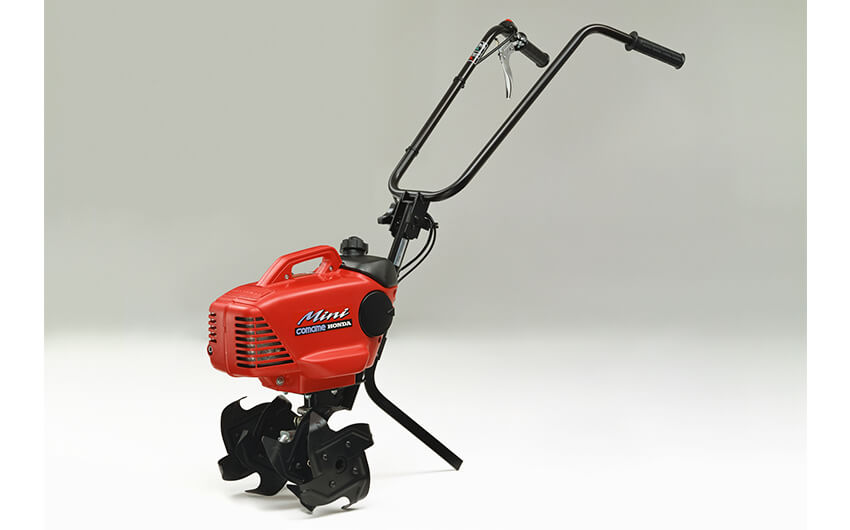
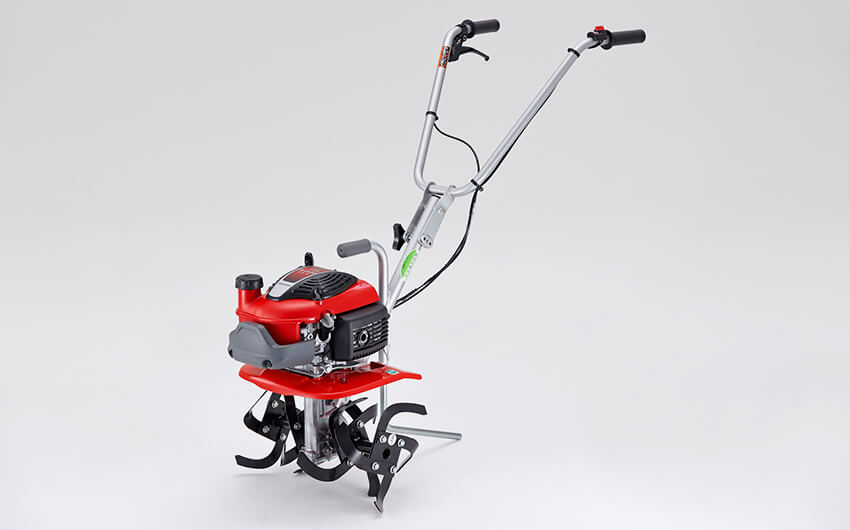
The Mini Komame F110 was born as the result of requests for a smaller garden tiller, and was fully remodeled as the FS201 in 2002. In 2016, its entire design was changed.
The new demand for hobby-type tillers created by the Comame F200 forced other manufacturers to adopt the name ‘Comame’ for their own mini-tillers, making the name virtually synonymous with these useful devices. The third model change for this popular tiller was released as the Comame F220 in 2001, and was followed by the 4th generation F220 in 2016. Total sales worldwide reached 550,000 units (as of 2016), making it a remarkably long-term hit product.
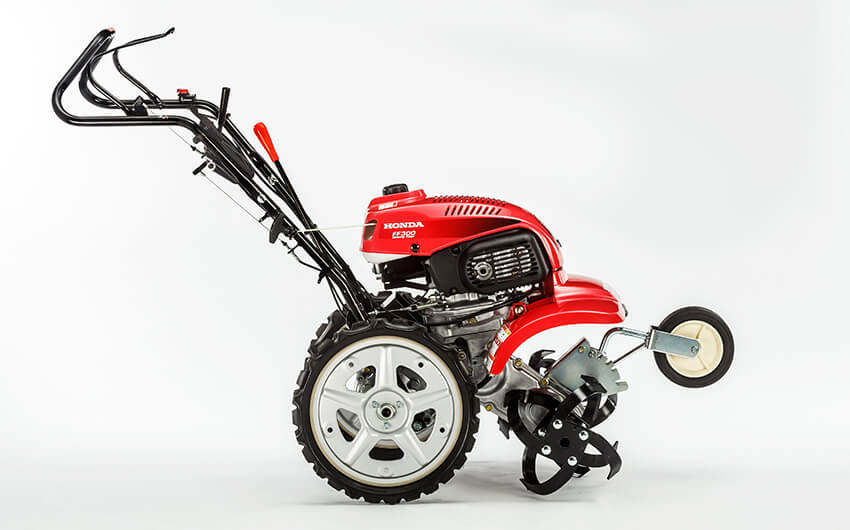
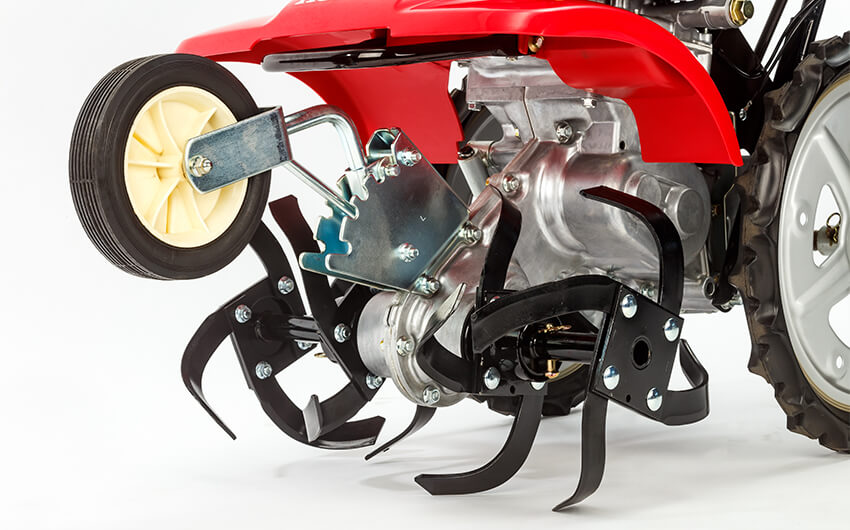
The Salad FF300 offered excellent cultivating capability with easy operation.
As needs began to diversify in this newly-formed market for hobby-type farm and garden equipment, calls for lighter and more compact tillers at lower prices—and even higher-priced versions that were easier to operate—came to be heard. Responding to these requests, Honda released the Mini Comame F110 in 1993 as an even smaller model specially designed for first-time users. The Puchina FG201 was released in 2016 as a continuation of the line.
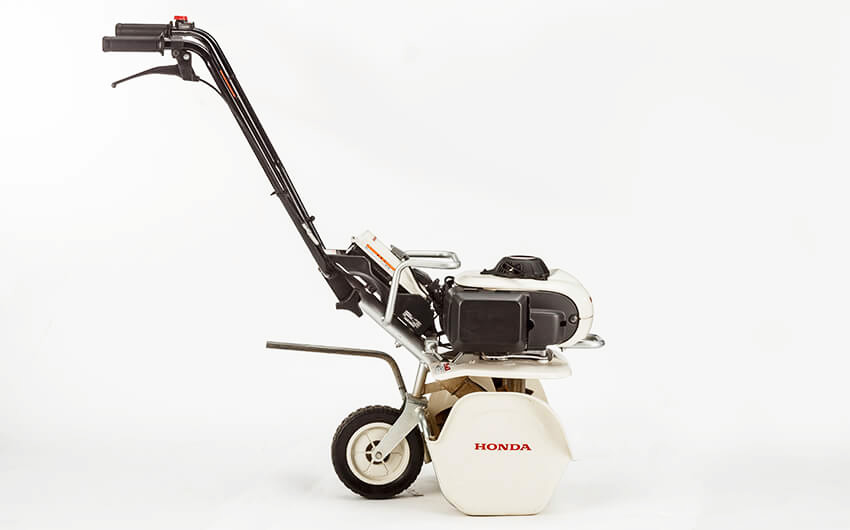
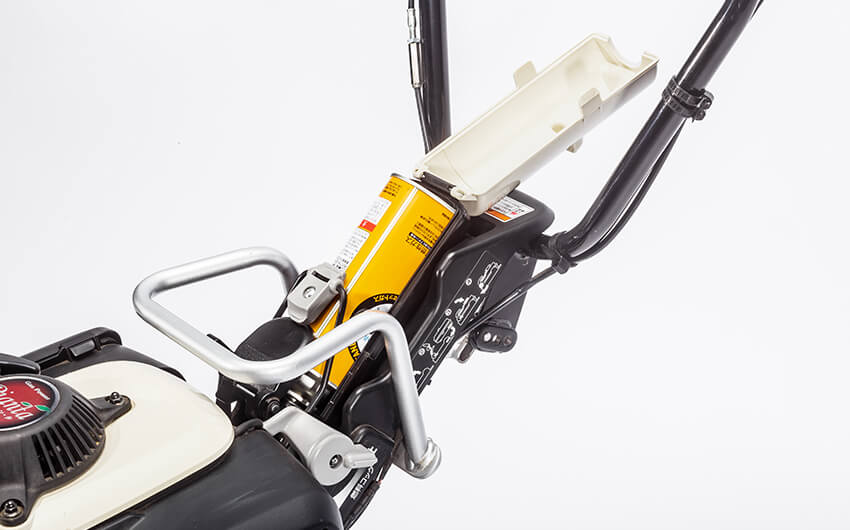
The Pianta FV200 was fueled by easy-to-use cassette-type LPG gas cartridges.
In 2003, Honda released the Salad FF300 with the Comame F220’s low center-of-gravity engine mounted in reverse and its tiller blades positioned in front instead of directly below to create a high-end model with superior straight-line stability. It was further equipped with Honda’s unique Active Rotary System (ARS), which rotates the inner tines of the front rotary in the normal direction while the outer tines rotate in reverse to better stabilize tilling operation at its set depth.
In 2009, the Pianta FV200 was released as a specially developed hobby model that offered a new focus on more convenient refueling and storage, as well as enhanced carrying ease.
The Pianta FV200 uses convenient and easy-to-buy LPG (liquid propane gas) canisters for fuel instead of conventional gasoline, making the tasks of refueling and fuel storage both safer and easier. The specified gas canister is inserted into a specially designed case for attachment or detachment from the machine with just a single action.
The FV200’s engine was based on the gasoline-type unit powering the Puchina FG201, and equipped with unique safety features such as a pressure-detection valve that shuts off when fuel line pressure rises too high, and a shut-off valve that automatically cuts the fuel supply when the engine stops. Other new functions like a vaporizer, which uses the heat from the exhaust to efficiently vaporize the fuel gas, took into consideration outside air temperatures at the time of year (early spring) that the tiller was most likely to be used (e.g. when sowing seeds).
The Puchina FV200 was also equipped with wheels to make it easier to maneuver by hand, and came with its own stand and carrying crate for placing it in the trunk of a car or storing it indoors. These features helped achieve the easy fueling, easy movement and easy storage required of a home and hobby model.
The Pianta FV200 succeeded in stimulating even greater demand for Honda tillers, as ninety percent of its purchasers were first-time buyers.
Honda’s tillers work with nature to cultivate the soil, and of course do so well within the world’s strictest regulations governing exhaust emissions and noise for both Europe and the USA. They also maintain excellent environmental performance with the best fuel economy figures in their class.
Starting from the original F150, which had such a profound effect in revolutionizing farm work and lightening the heavy burden of farmers throughout Japan, Honda’s tillers have evolved to meet the demands of farmers everywhere, and have been a driving force in their widespread adoption. Also, as farming in Japan has changed with the times, Honda has likewise successfully adapted by developing and manufacturing super-compact hobby-type tillers, a previously unseen but now significant part of the market. This development has subsequently allowed many more people to enjoy the pleasure of tilling the soil.
If there had been no F150, and if there had been no Comame… If Honda had not become a maker of agricultural
equipment, but remained an engine manufacturer, its flexible thinking and immense technological capabilities
would still surely have had a significant influence on the evolution of agriculture both in Japan and around the
world.